
Sports & recovery
From Injury to Finke: Andrew's Journey
Less than two years after a fractured neck and back, local rider Andrew Michalak lined up at one of Australia's toughest off-road races. A recovery story from the Port Pirie clinic.
6 August 20257 min readBy Sarah Grapentin, Diploma-qualified Remedial Massage Therapist (ATMS #53374)
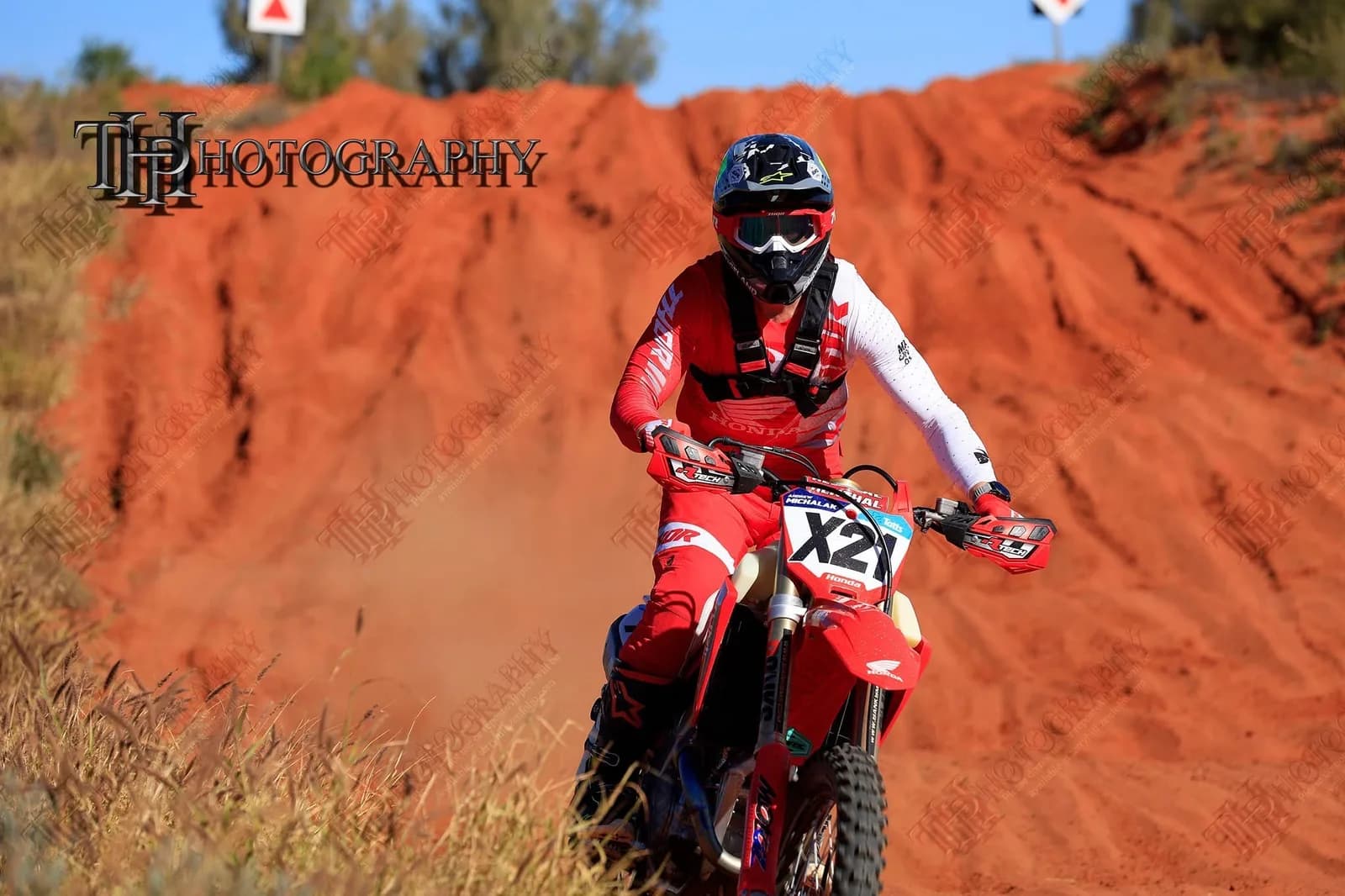
Over the June long weekend, local rider Andrew Michalak took on one of the toughest off-road events in Australia — the legendary Finke Desert Race. The three-day event is made up of Saturday's prologue, a 226km run from Alice Springs to Finke on Sunday, and the brutal return leg back to Alice on Monday. It's the kind of course where fitness matters, machine preparation matters, and the honest resilience of a body that's spent hours on a bike matters just as much.
Completing Finke is a huge feat for any rider. For Andrew, this race meant something more.
Just under two years ago, he fractured his neck and upper back, also tearing ligaments and tendons around his spine. His recovery has been long and challenging — physically and mentally — with every step pointed at one goal: getting strong enough to return to racing.
What the injury actually looked like
The initial injury was the kind of thing that ends riding careers for a lot of people. Fractured vertebrae in both the neck and upper back, torn ligaments and tendons around the spine, and the cascade of soft-tissue damage that comes with a spine forced into a position it wasn't built to survive. The bones are the visible part of an injury like that; the ligaments, tendons, discs and stabilising muscles that hold the spine together are the quieter work. All of it had to heal, and none of it was going to heal on a schedule anyone could push.
The medical intervention side was handled by the treating team — imaging, immobilisation, careful clearance through the stages that come before any soft-tissue therapy is safe. Long before Sarah's work came into the picture, the priority was structural. What comes after — how a body relearns to trust itself under load — is where the slower, longer work begins.
A long road back to the start line
Recovery from a serious spinal injury isn't linear. There are weeks when everything feels like it's progressing, and weeks when something flares up and the timeline feels further away again. Andrew's case involved more than the bones knitting back together — the surrounding soft tissue had to learn to take load again. Ligaments, tendons, deep stabilising muscles and the larger muscle groups that had been compensating throughout the rehab months all had work to do.
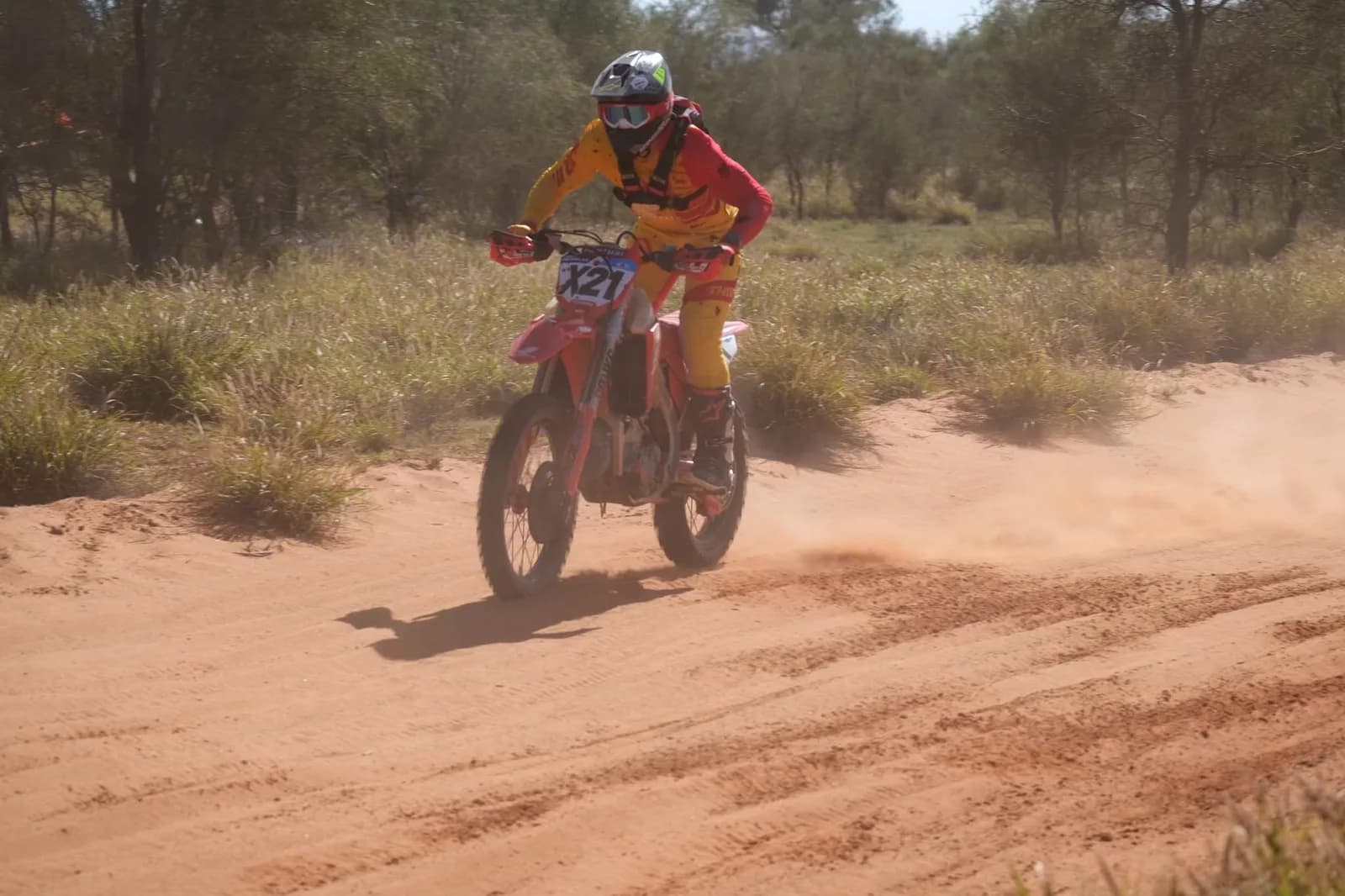
Throughout the lead-up to Finke, Sarah at Massages By Sarah in Port Pirie has been part of Andrew's preparation. Regular remedial massage and cupping therapy were used through training blocks to help manage ongoing pain patterns, support tissue mobility, and help keep his body ready for the loads off-road racing puts through the spine, shoulders and forearms. Even when training paused to travel and test the track over Easter, the work kept ticking along — and as soon as the race finished, Sarah was back on the table-side helping with post-race recovery.
Where remedial work fits in return-to-sport recovery
When someone is rebuilding after a significant injury, the work isn't about a single fix. It's consistent, considered care that meets the body where it's at — easing residual tightness after a heavy training week, addressing compensations that creep in, and supporting the tissue that's been working hardest to protect what was hurt.
Remedial massage can be a useful part of that picture. Techniques like sustained pressure, slow stripping strokes, gentle stretching and trigger point work may help relieve specific areas of tightness, and the hour on the table is itself a moment for the nervous system to settle. For athletes preparing for or recovering from major events, sessions are typically scheduled around training cycles: deeper, more focused work earlier in a block, lighter and more mobility-oriented work as the event approaches, and recovery-focused sessions in the days afterwards.
What the treatment cadence looked like week to week
Andrew's sessions weren't a single template. Through the middle of a training block, sessions typically ran 60 minutes with deeper focus on the mid and upper back, the shoulders, and the forearms — the areas taking most of the residual load from long hours on the bike plus the compensations still working their way out of the injured region. As race season built, sessions shifted lighter — less depth, more mobility-oriented work through the same areas, and cupping playing a bigger role in the final couple of weeks so nothing felt overworked heading into the event.
After Easter — when Andrew and a couple of mates travelled up early to Alice Springs to test the track — there was a short pause on formal training, but the soft-tissue work kept ticking along. That's the kind of decision that only makes sense inside a long recovery: the training paused, the recovery-supportive care didn't. See related work on massage for neck and shoulder tension and best massage for back pain in Port Pirie for the more everyday version of what these sessions looked like.
Why cupping was part of the plan
Cupping therapy works by gently lifting the skin and underlying tissue rather than pressing into it. For someone like Andrew — managing chronic load through the back, shoulders and forearms from years of riding plus the demands of rehab — cupping may help with areas that don't respond as well to pressure alone. The lifting action can support tissue mobility in spots where old compensations and dense fibrous tissue have settled in.
The marks that often follow cupping aren't bruises in the painful sense — they're a circulatory response and tend to fade over several days. Not everyone marks, and the strength of any marks varies from session to session. See cupping therapy explained for the plain-language guide, or cupping vs deep tissue massage for how the two often work together. For many athletes, regular cupping becomes a familiar and welcome part of the recovery routine.
The mental side of a long comeback
Physical recovery is one part of the story. The mental side of coming back from an injury that could easily have ended your riding career is quieter and, honestly, harder to talk about. The first time back on a bike after that kind of injury is a decision as much as a movement. So is the first time you push a section you used to push without thinking. So is lining up on a start line at an event you weren't sure you'd get back to.
Sarah's role in the clinical side is soft-tissue support. But it's worth naming what a lot of long-recovery clients say quietly at the table: the hour of hands-on care, where nothing is being asked of you, is often the only stretch in a busy rehab week where the body is being helped rather than pushed. That matters more than the numbers on any recovery plan let on.
Making the start line is its own win
Andrew didn't finish in the position he was aiming for at Finke, but he made it there and made it back. Anyone who's followed a long recovery knows that finishing-line numbers are only one measure of what's been overcome.
There's a particular quiet pride that comes with showing up to something you weren't sure you'd get back to. The hours of physio, the careful build-up, the moments of doubt — all of it sits somewhere in a result that on paper might just be a placing in an off-road race.
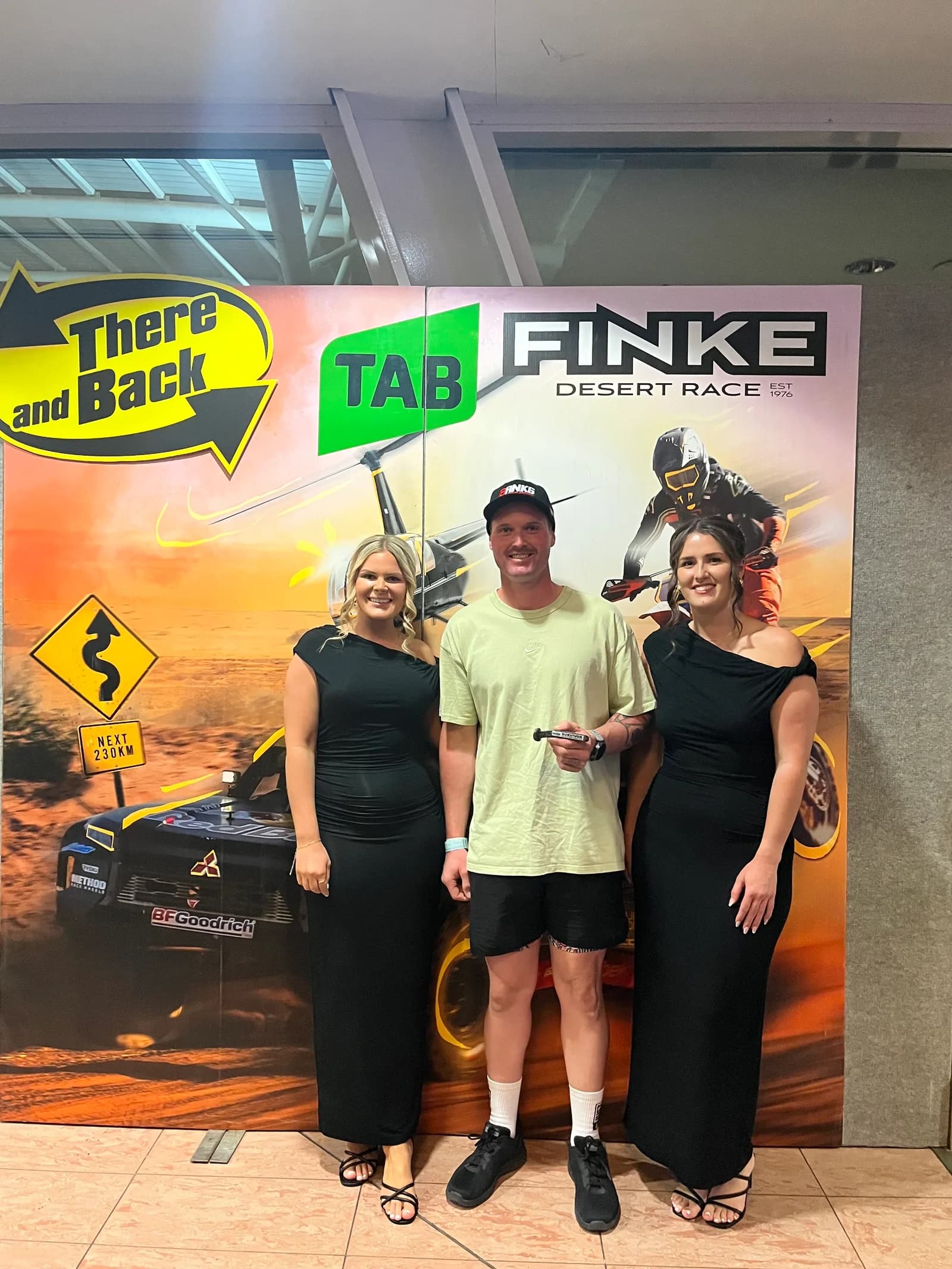
Congratulations to Andrew on this massive achievement. We're proud to have helped on the journey, and we'll be cheering for whatever you point yourself at next.
What other people rebuilding from injury can take from this
No two recoveries look the same, but a few things Andrew's story lines up with what Sarah sees across every long-injury client at the clinic:
- Follow your medical team's timeline, not the internet's — [neck](/conditions/neck-pain) and [back injury](/conditions/back-pain) rehab moves at the pace your body decides
- The compensations elsewhere in your body matter as much as the injured area — feet, hips, opposite shoulder all pick up load and need care too
- Consistency beats intensity: a fortnightly session for six months does more than three big sessions in a rough week
- Cupping and [deep tissue](/services/deep-tissue-massage) both have a role, and they usually work better together than either does alone
- The nervous-system reset of the session itself is part of the treatment, not a bonus
- See related pieces on [sports massage benefits for active people](/blog/sports-massage-benefits-active-people) and [frozen shoulder recovery massage](/blog/frozen-shoulder-recovery-massage) for adjacent conditions
If you're recovering from injury
Every recovery story is different. Massage isn't a replacement for medical care — please always be guided by your treating professionals, especially after a significant injury. Once you're cleared for active rehab, remedial massage and cupping may be a useful complement to the physio, strength work and patience that recovery asks of you. If you're not sure where you sit in the timeline, contact Sarah to talk it through first before booking anything.
Sarah offers remedial, sports, deep tissue, trigger point, cupping, hot stone, pregnancy and relaxation massage in Port Pirie, with sessions tailored for athletes and anyone working back from injury. If you're rebuilding towards something you love — a race, a season, a return to running, or just being able to move without pain — get in touch and Sarah will shape the sessions to where your body actually is right now.
If you'd like to talk through what's going on with your body and book a session, get in touch with Sarah on 0439 594 999 or book online. Private health insurance rebates may be available depending on your provider and level of cover.
Treatments that may help.
Conditions this post touches on.
For a deeper look at specific patterns Sarah works with, see the condition-focused pages below.
Neck Pain & Cervical Tension
Careful remedial massage in Port Pirie for neck stiffness, postural tension and the surrounding upper back and shoulders — including supportive work alongside post-surgical rehab.
Learn more →
Back Pain
Targeted, careful massage in Port Pirie for the lower, mid and upper back — designed to help relieve tension and support better movement.
Learn more →
Frozen Shoulder (Adhesive Capsulitis)
Careful, supportive massage in Port Pirie for adhesive capsulitis — designed to work alongside your medical and physio care through each stage of recovery.
Learn more →
Where clients travel to Sarah from.
Sarah's Port Pirie clinic is a regular destination for clients from these nearby towns. See the area page for drive-time, common client types and local context.