
Pain relief
Massage for Sciatica: What Helps and What to Try at Home
Sciatica gets used as a catch-all term, but it usually mixes nerve symptoms with tight muscles around the pelvis. Here's an honest look at what massage can and can't do, plus red flags that mean GP first.
26 May 20267 min readBy Sarah Grapentin, Diploma-qualified Remedial Massage Therapist (ATMS #53374)
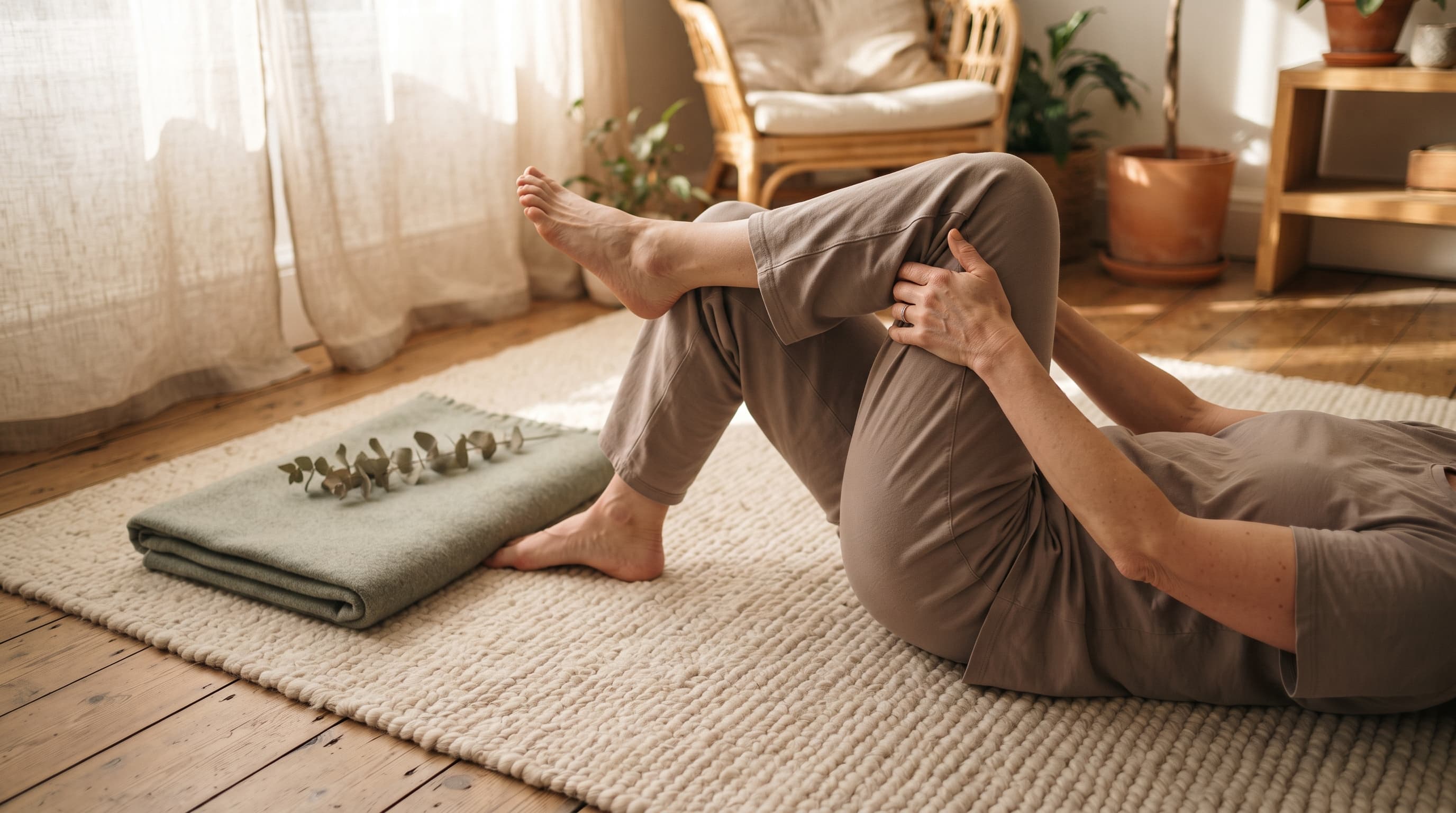
Sciatica is one of those terms that gets used loosely. Strictly, it describes pain that travels along the path of the sciatic nerve — from the lower back, through the glutes and down the leg. In practice, most people in Port Pirie who describe themselves as 'getting sciatica' have a mix of true nerve symptoms and tight muscles around the pelvis pulling on the same areas. Thoughtful remedial massage can be a meaningful part of looking after both, but it helps to be honest about what massage can and can't do.
What does sciatica actually mean?
The sciatic nerve is the largest nerve in the body — it forms from the lower lumbar and upper sacral nerve roots, exits the pelvis under the piriformis muscle in the buttock, and runs down the back of the thigh into the lower leg and foot. Clinically, 'sciatica' refers to symptoms travelling along that nerve's path: pain, tingling, numbness, or weakness in the buttock, back of the thigh, calf and sometimes foot. The underlying cause can be a disc bulge irritating a nerve root, tightness in the piriformis compressing the nerve as it exits the pelvis (sometimes called piriformis syndrome), lumbar spinal stenosis, or a combination of the above.
True nerve pain vs muscular referred pain — how to tell
True sciatic nerve irritation tends to feel sharp, electrical or burning, and follows a specific path — often down the back of the thigh and into the calf or foot. It can come with tingling, numbness or weakness in the leg. Muscular tightness around the lower back and glutes, by contrast, feels deeper and more diffuse — a dull ache in the buttock, an aching pull down the hamstring, tightness through the lower back that doesn't travel past the knee. The two often show up together, which is why a careful chat at the start of a session matters more than picking the 'right' technique on paper.
How can massage help sciatica?
Massage doesn't fix sciatica in the clinical sense — it doesn't move a disc bulge back into place, and it doesn't decompress a genuinely trapped nerve root. What it can do is help relieve the muscular tension that almost always sits alongside nerve symptoms — especially in the glutes (piriformis in particular), the lumbar erectors, quadratus lumborum and the hamstrings. When those muscles ease, the demand on irritated nerves can sometimes settle, and the overall picture becomes more manageable. For some clients across Port Pirie and the Mid North, regular remedial work becomes part of a broader plan that also includes movement, physiotherapy and rest.
Deep tissue and trigger point techniques are often blended into a sciatica session. The exact mix depends on what's tight, where you're tender, and how your symptoms change with pressure. Sarah may also incorporate gentle sustained holds around the hip flexors and glute medius if they're contributing to the pattern, plus soft-tissue work through the mid-back and opposite hip if compensations have crept in.
What massage cannot do
Being honest: massage won't undo a significant disc bulge, won't reverse advanced spinal stenosis, and won't cure a nerve root that's genuinely being compressed by structural changes. If those are the primary drivers of your symptoms, imaging and a specialist review are the appropriate next steps, and massage is a supportive tool rather than the main treatment. Sarah will refer on if your history or symptoms suggest what's going on is outside the scope of soft-tissue work.
Techniques, areas and red flags at a glance
| Session focus | What Sarah works | Red flags → GP first |
|---|---|---|
| Piriformis and glute release | Sustained pressure and trigger point work into piriformis, gluteus medius and minimus | Loss of bladder or bowel control |
| Lumbar erector and QL work | Slow strokes and holds along the lumbar spine and quadratus lumborum | Saddle numbness (inner thighs, groin, buttocks) |
| Hamstring release | Sustained pressure and stretching along the hamstring group | Progressive weakness in the leg or foot |
| Hip flexor and TFL release | Gentle sustained work through psoas access, hip flexors and TFL | Symptoms after a fall or heavy lift |
| Mid-back and opposite hip | Compensation work through the thoracic and non-affected side | Fever, unexplained weight loss, night pain |
| Nervous system reset | Slow, sustained work to bring down guarding across the whole area | Numbness or weakness that keeps spreading |
What to try between sessions
- Gentle walking — even short loops around the block. Staying still often makes sciatica feel worse.
- A tennis ball or lacrosse ball on the glutes (avoid rolling the lower back directly).
- A warm shower or heat pack on the lower back and glutes before bed.
- Break up long sitting — set a timer to stand and walk every 30 to 40 minutes.
- Sleep with a pillow between your knees if side-sleeping; a pillow under the knees if on your back.
- Avoid heavy lifting and deep forward-bending while the symptoms are acute.
When should you see your GP first?
Massage isn't right for every sciatica presentation. See your GP urgently if any of these show up: loss of bladder or bowel control; numbness in the saddle area (inner thighs, groin, buttocks); progressive weakness in the leg or foot (foot drop is the classic sign); symptoms that came on suddenly after a fall or a heavy lift and haven't eased; fever alongside your back and leg pain; unexplained weight loss; or night pain that wakes you consistently. These are less common patterns but they can indicate something that needs medical assessment before hands-on work. This isn't scaremongering — it's just responsible practice.
How often should you book while it's flaring?
For a fresh sciatica flare, a weekly or fortnightly rhythm for the first 3 or 4 sessions usually shifts the pattern noticeably. Once symptoms settle, monthly maintenance works for most people. If nothing has changed after 3 sessions, that's a signal to reassess — sometimes the answer is a different technique or session length, sometimes the answer is a referral to a physio, GP or imaging. See how long does remedial massage take to work for more on realistic cadence.
How does massage pair with other care?
Sciatica responds best to a combined approach in Sarah's experience: soft-tissue work to unload the muscular contribution, structured movement (physio-guided or GP-recommended) to rebuild capacity in the glutes and core, and short-term pain management if you need it. Massage on its own can help; massage plus movement plus honest professional feedback tends to be genuinely more effective. If you're already seeing a physio, mention it so Sarah can time sessions around your movement work.
Related reading
Best massage for back pain in Port Pirie covers back pain more broadly. Chiropractor vs remedial massage covers when to look outside massage. The sciatica page has more detail on what a session typically looks like at the clinic.
If you're unsure whether your symptoms suit massage, ring Sarah on 0439 594 999 for a quick chat before booking, or book online at a time that works for you. Weekday hours are 10am to 7pm. Private health rebates apply through most funds' extras cover — Sarah is ATMS registered (#53374).
How long does sciatica usually last?
It depends heavily on the cause. For sciatica that's largely muscular — piriformis irritation, glute tightness, an aggravated lumbar erector — a run of 3 to 6 fortnightly remedial sessions plus daily gentle movement usually shifts things noticeably. For sciatica driven by a disc bulge, the honest timeline is longer — often 6 to 12 weeks for the sharp acute phase to settle, and sometimes months of maintenance work to keep it that way. Massage over that period helps the muscular contribution and supports the overall recovery, but it's part of a bigger picture that also includes movement, sometimes physio, and sometimes medical management. If you've had sciatica for more than a few months without clear progress, that's a signal to check in with your GP and consider imaging.
What about pregnancy-related sciatic pain?
Pregnancy can bring on sciatic-type pain as the growing uterus shifts pelvic loading and the ligaments soften. Pregnancy massage in the second and third trimester often eases the muscular contribution — tight glutes, guarded lumbar erectors, aching hamstrings — while adapting positioning (side-lying with bolster support) to keep you comfortable. It's one of the more commonly booked reasons for pregnancy massage. See pregnancy massage safety by trimester for more.
If you'd like to talk through what's going on with your body and book a session, get in touch with Sarah on 0439 594 999 or book online. Private health insurance rebates may be available depending on your provider and level of cover.
Treatments that may help.
Conditions this post touches on.
For a deeper look at specific patterns Sarah works with, see the condition-focused pages below.
Sciatica & Sciatic-Type Pain
Careful, methodical massage in Port Pirie for sciatic-type pain that runs from the lower back through the glutes and down the leg.
Learn more →
Back Pain
Targeted, careful massage in Port Pirie for the lower, mid and upper back — designed to help relieve tension and support better movement.
Learn more →
Where clients travel to Sarah from.
Sarah's Port Pirie clinic is a regular destination for clients from these nearby towns. See the area page for drive-time, common client types and local context.