
Pain relief
What Type of Massage Is Best for Back Pain in Port Pirie?
If you live with back pain in Port Pirie, the right kind of massage can make a meaningful difference. Here's an honest guide to matching remedial, deep tissue, cupping and trigger point work to the pattern of pain you're actually carrying.
12 January 20267 min readBy Sarah Grapentin, Diploma-qualified Remedial Massage Therapist (ATMS #53374)
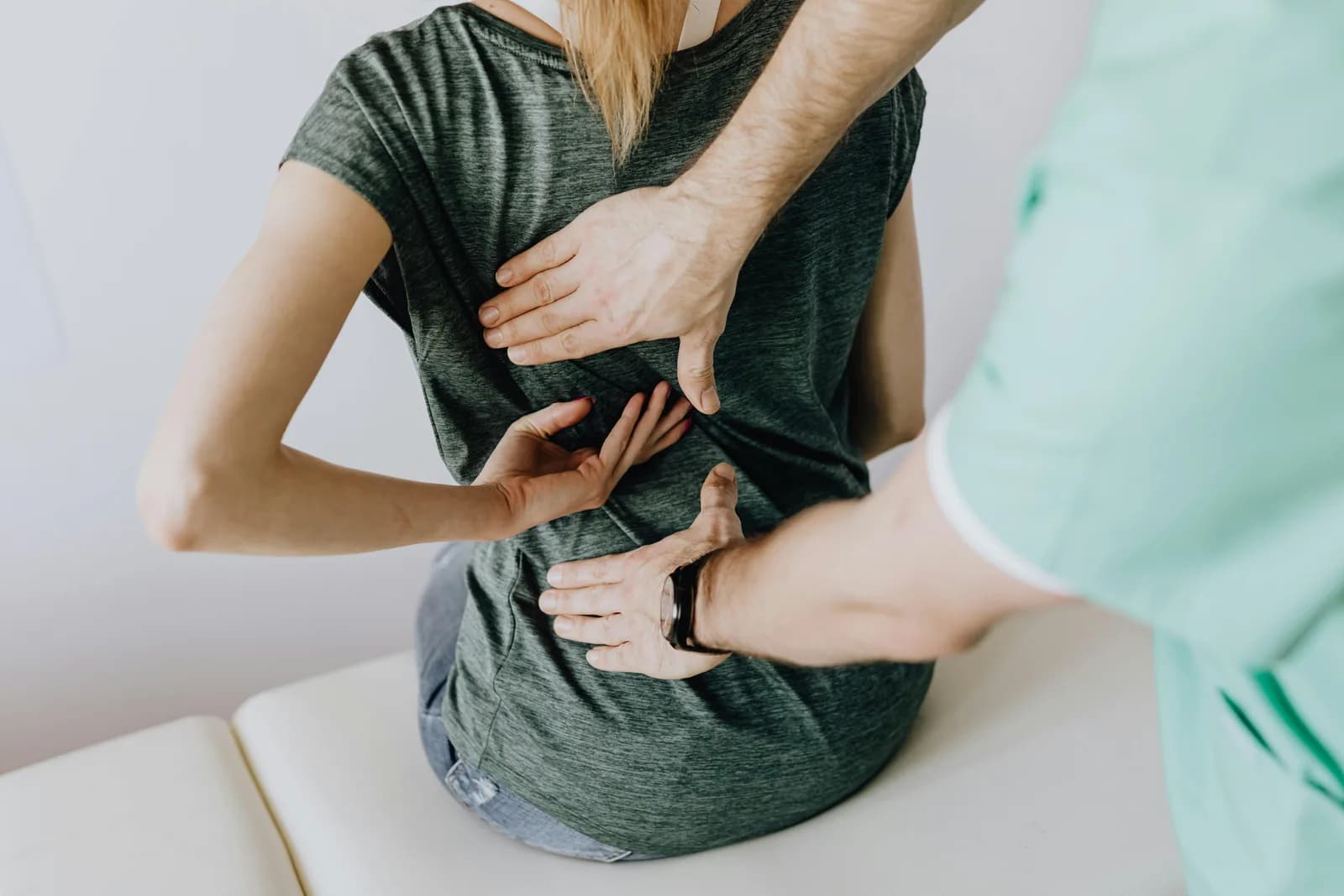
Back pain is one of the most common reasons people book at the Port Pirie clinic. The causes vary — long days on the worksite, hours behind the wheel, hunching over a phone or laptop, a lifting tweak that never fully settled, a rough patch of sleep, or an old injury that quietly reminds you it's still there. The honest news is that no single massage style is 'best' for back pain in a general sense. The right style depends on the pattern your back is actually carrying, and the practical work is matching one to the other.
What causes most back pain in Port Pirie?
The pattern Sarah sees most in the clinic is cumulative — not a single injury, but weeks or months of the same movement pattern building tension into the same tissue. Long stretches in the ute, ten-hour smelter shifts on hard surfaces, farm work involving repeated bending and lifting, hospital and nursing shifts with awkward transfers, retail and hospitality workers on their feet, and the desk-bound crew whose upper backs quietly stiffen through the week. Each of these builds a slightly different signature into the back.
There's also the sleep component — nights broken by shift work or small kids leave the nervous system on edge, which shows up as tight erectors, guarded glutes and a low-grade ache that doesn't quite go away. If any of this sounds familiar, the shift-worker massage guide covers scheduling around a roster in more detail.
Does massage actually help back pain?
The honest answer is yes, for many people, and the research broadly agrees for musculoskeletal back pain. The American College of Physicians' 2017 non-invasive low back pain guideline lists massage among the treatment options clinicians should consider before medication for acute and sub-acute low back pain. Massage doesn't 'fix' structural issues like a disc bulge or facet joint arthritis, but for the muscular and postural components that sit alongside almost every back-pain presentation, it can meaningfully help.
In practice at the clinic, most clients notice something after the first session — looser, less held, easier to move. Sustained change for long-standing patterns usually takes a run of fortnightly sessions. If you want the full cadence breakdown, how long does remedial massage take to work covers it session by session.
Which modality suits which back pattern?
| Back pattern | Best-fit modality | Typical session |
|---|---|---|
| Cumulative tightness across the whole back | Remedial (assessment-led blend) | 60 min remedial — light to firm pressure across the pattern |
| One localised, ropy tight spot that's sat there for months | Deep tissue focus | 60 min remedial with deep tissue focus on the area |
| Pain that refers or 'moves' — feels disconnected from tightness | Trigger point therapy | 45–60 min with focused pressure holds and follow-through |
| Stubborn wider area that pressure alone hasn't shifted | Cupping add-on | 60 or 90 min remedial + cupping ($15 add-on) |
| Sciatic-type nerve pain down a leg | Remedial with glute + lumbar focus | 60 min — see the sciatica page for red flags first |
| Pregnancy-related lower-back load | Pregnancy massage (2nd/3rd trimester) | 60 min side-lying with bolster support |
| Post-training recovery for lifters or runners | Remedial + deep tissue blend | 60 min timed around training, not the day before or after a hard session |
When is remedial massage the right first booking?
Remedial massage is the default for a reason. It's assessment-led — Sarah checks in on what's tight, restricted or referring pain, and then selects the techniques that suit. That might mean firm sustained pressure through a stubborn erector, gentle sustained holds through a guarded glute, trigger point work through a knotty section of upper back, and a slow passive stretch through a restricted hip. For back pain where you're not entirely sure what's driving it, this is the honest starting point.
When does deep tissue suit better?
Deep tissue massage works into the deeper muscle layers with slow, firm, sustained pressure. It's the tool Sarah reaches for when a specific area has been sitting stubborn for weeks or months, and lighter work has skated over it. It's not about grinding — good deep tissue feels like satisfying, deep pressure that you can breathe through. If firm pressure has worked for you in the past and the tension is clearly localised, book with deep tissue focus. If unsure, remedial vs deep tissue massage walks through the choice in more detail.
When does trigger point therapy come in?
Trigger points are small, hyper-irritable spots inside a muscle that often refer pain elsewhere. A knot in your gluteus minimus can feel like sciatica. A tight spot in your quadratus lumborum can feel like a kidney ache. A trigger point in your upper trap can feel like a headache creeping up from the neck. When your back pain moves around, feels disconnected from where the muscle actually feels tight, or refers into another region, trigger point work is the technique that maps the pattern and works the specific points that produce it.
Where does cupping fit for back pain?
Cupping is a decompressive technique — the silicone cups lift the tissue upward rather than pressing into it. It's especially useful for wider stubborn areas that haven't fully responded to pressure alone, and for tissue that feels sluggish, cold or slow to warm up. At Massages By Sarah it's a $15 add-on to any full session, and it's the most-booked combination for chronic back tension. The full comparison is in cupping vs deep tissue massage.
What if the pain is sciatic-type nerve pain?
If your pain travels down the back of the thigh into the calf or foot, feels sharp, electrical or burning, or comes with numbness, that's more likely a nerve component than pure muscular tightness. Massage can still meaningfully help — most 'sciatica' involves a real muscular contribution around the glutes, piriformis and lumbar erectors — but there are red flags that need a GP first: bladder or bowel changes, saddle numbness, or progressive weakness in the leg. The sciatica-specific post covers this in more detail.
How many sessions before you feel a real difference?
- Most clients notice something in the first session — looser, less held, better sleep that night.
- Recent tweaks often settle within one or two sessions.
- Chronic patterns (months-plus) typically need 3 to 6 fortnightly sessions before easing to monthly maintenance.
- Training-load support usually sits at every 2 to 4 weeks during peak periods.
- If nothing has shifted after three sessions, mention it — sometimes the answer is a different technique, sometimes a referral.
What can you do between sessions to help your back?
- Break up long sitting or driving — set a timer to stand and walk every 30 to 40 minutes.
- Gentle daily movement beats hard sessions — a walk, a swim, a slow yoga flow.
- Warm shower or heat pack on the lower back before bed if things are feeling tight.
- Sleep with a pillow between your knees if side-sleeping, or under your knees if on your back.
- Stay hydrated on the day of the massage and the day after.
When should you see a GP first?
Massage isn't right for every back-pain presentation. See your GP first if the pain came on suddenly after a fall or heavy lift, if you have any loss of bladder or bowel control, saddle numbness, progressive leg weakness, unexplained weight loss, fever, or night pain that wakes you consistently. These are less common but they matter. Sarah will refer on if anything in your history suggests it's outside the scope of massage.
How to book at Massages By Sarah
You can book online 24/7 or ring Sarah on 0439 594 999. Weekday hours are 10am to 7pm. Sessions run 30 minutes ($50), 45 minutes ($65), 60 minutes ($85, the most-booked) or 90 minutes ($120). Private health rebates apply through most funds' extras cover — Sarah is ATMS registered (#53374). See the pricing page for the full list.
How does massage compare to painkillers for back pain?
Painkillers and massage do different jobs. Paracetamol, ibuprofen and other over-the-counter pain relief can genuinely help you get through a rough week, and there are cases where short-term prescription pain relief is the right call — that's between you and your GP. What painkillers don't do is address the muscular tension, postural loading, or nervous-system tone that's often part of what's producing the pain in the first place. Massage works on those underlying pieces, which is why the two often pair well — the medication takes the edge off in the short term, the hands-on work chips away at the drivers over a run of sessions.
How does back-pain massage fit alongside physio?
A common question at the clinic is whether to see a physio or a remedial therapist. The honest answer is often both. Physios lead on assessment, diagnosis and structured movement — the exercise prescription that rebuilds capacity in the muscles and joints around your spine. Remedial massage handles the hands-on soft-tissue release that makes those movements more available to you. Many clients see both across a fortnight — physio on one appointment, massage on the other — and find the two together shift things faster than either alone. If you're already seeing a physio, mention it and Sarah will time the sessions around your movement work.
If you'd like to talk through what's going on with your body and book a session, get in touch with Sarah on 0439 594 999 or book online. Private health insurance rebates may be available depending on your provider and level of cover.
Treatments that may help.
Conditions this post touches on.
For a deeper look at specific patterns Sarah works with, see the condition-focused pages below.
Back Pain
Targeted, careful massage in Port Pirie for the lower, mid and upper back — designed to help relieve tension and support better movement.
Learn more →
Sciatica & Sciatic-Type Pain
Careful, methodical massage in Port Pirie for sciatic-type pain that runs from the lower back through the glutes and down the leg.
Learn more →
Where clients travel to Sarah from.
Sarah's Port Pirie clinic is a regular destination for clients from these nearby towns. See the area page for drive-time, common client types and local context.
Port Augusta
Approximately one hour from Port Augusta to Port Pirie.
Massage for Port Augusta →
Whyalla
Approximately 90 minutes from Whyalla to Port Pirie.
Massage for Whyalla →
Crystal Brook
Approximately 20 minutes from Crystal Brook to Port Pirie.
Massage for Crystal Brook →
Jamestown
Approximately 50 to 60 minutes from Jamestown to Port Pirie.
Massage for Jamestown →