First-time clients
What to Expect From Your First Massage Appointment
Booking your first massage can feel like a step into the unknown. Here's a friendly walk-through of what actually happens at your first session.
22 February 20267 min readBy Sarah Grapentin, Diploma-qualified Remedial Massage Therapist (ATMS #53374)
Before you arrive
Once your appointment is booked, you'll receive a confirmation with the address and any details you need. The couple of hours before your session are worth a bit of thought — not because anything dramatic is required, but because a few small choices make the session land better. Drink a glass of water in the hour beforehand. Avoid a heavy meal in the two hours before your session; a full stomach during deep parasympathetic relaxation is uncomfortable. If you can, avoid caffeine right before — a wired nervous system doesn't settle as easily.
Aim to arrive a few minutes early rather than sliding in flustered. Two minutes to sit, drop your shoulders, and take a breath before Sarah walks you in makes a real difference. If you're driving in from further out in the Mid North, allow for parking. The contact page has the address and current directions.
What to bring and what to wear
Wear comfortable, easy-to-change clothes — you'll be changing before and after the session. Loose t-shirts, joggers, or anything you'd throw on for a relaxed afternoon works well. Avoid tight jeans, wound-up jewellery, or complicated buckles. Bring your health-fund card or member number if you plan to claim (see private health rebates for massage for the full picture on claiming). Bring your phone in case you'd like to book your next session on the spot, but you don't need much else — the clinic supplies towels, oils, and everything else you'll need.
If you have hair that gets in the way when lying face-down, a hair tie helps. If you wear contacts, most people leave them in — but glasses come off during face-down work, and you'll have somewhere safe to leave them.
The initial chat
Sarah will welcome you in and start with a short conversation — usually two to three minutes — about what's brought you in. You don't need to have all the answers or use the right technical language. What's most helpful: where you're feeling tension or pain, how long it's been going on, what you've been doing that might have contributed (job, training, poor sleep, stress), and any injuries, surgeries or conditions that are relevant. If you take regular medications, mention them. If you're pregnant, mention that too — Sarah will adapt the session (see the pregnancy massage page for the specifics).
You'll also be asked about pressure preferences. Some people know they love firm work; others prefer gentle. If you don't know, that's fine — Sarah will start at a moderate pressure and adjust as she goes. There's no wrong answer here; every body is different, and Sarah is used to reading feedback in real time.
What draping and undressing actually look like
Draping is a professional standard, and it's absolute at Massages By Sarah. Here's exactly how it works: after the intake chat, Sarah steps out of the room. You undress to your comfort level in private — most people leave underwear on. You lie on the table under a towel or sheet, in whichever position Sarah has asked (usually face-down to start). She knocks and returns only when you say you're ready.
Throughout the session, you're covered by the sheet or towel except for the specific area being worked on. When Sarah works your back, only your back is uncovered. When she moves to your legs, your back is re-covered and one leg is exposed at a time. Chest and buttocks stay covered at all times. You never have to lift the sheet, adjust yourself, or manage draping — Sarah handles all of it. When it's time to change position (usually rolling over from face-down to face-up partway through), Sarah lifts the sheet in a way that shields you, and you roll under it. If any of this feels awkward the first time, that's normal — most first-time clients relax about it within the first ten minutes.
Session lengths and what fits where
| Session length | What fits | Best for |
|---|---|---|
| 30 minutes | One focused area — neck and shoulders, or lower back only | Return visits, targeted resets |
| 45 minutes | Two areas, or upper body full | Focused first sessions, ongoing maintenance |
| 60 minutes | Full body remedial, or focused work plus relaxation finish | The most common booking — great for first-timers |
| 90 minutes | Full body plus specific work; hybrid remedial + relaxation | Multiple loaded areas, deep-tension patterns, treat sessions |
What happens during the actual treatment
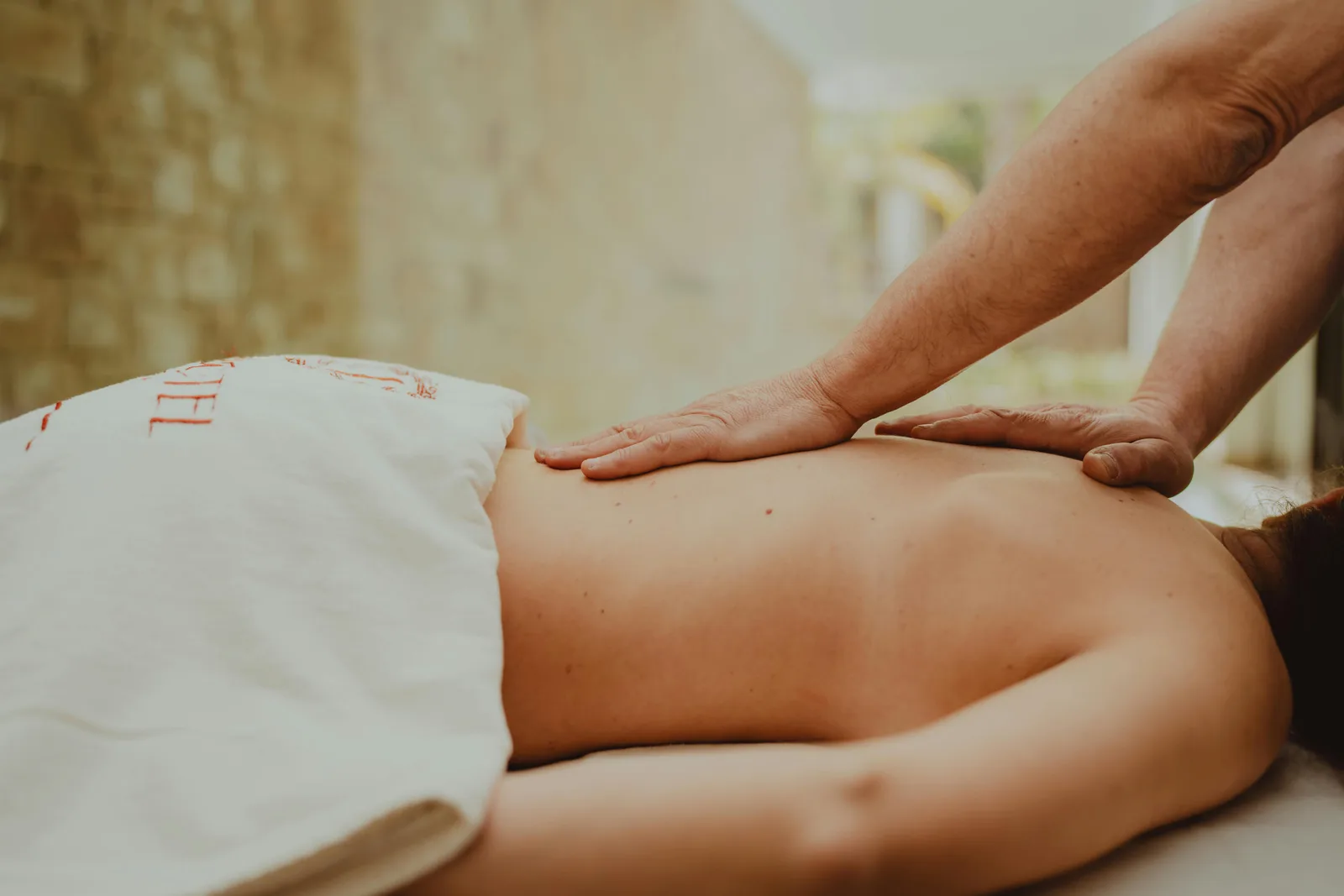
Once you're settled on the table, Sarah usually begins with broad, warming strokes across the back — a way of introducing her hands to your tissue before any deeper work starts. From there, she moves through whichever areas the intake chat pointed her toward, using a range of techniques: sustained pressure, gliding strokes, trigger point work, gentle stretching, and (if you've booked it) cupping or hot stone additions.
The pressure is adjustable throughout. A moderate first pass over each area lets Sarah find what's tight; specific pressure into those spots is where the actual therapeutic work happens. Somewhere partway through — usually around the halfway mark — Sarah will ask you to roll over so she can work the front of your legs, arms, chest and neck. You don't need to speak during the session unless you want to. Some clients drift off; others chat; both are fine.
When should you speak up during the session?
Any time. Feedback is welcome, not disruptive. Specifically:
- If pressure is too firm — a quick 'ease off a bit' is welcome
- If pressure is too light — 'you can go a bit deeper' is welcome too
- If you're cold — Sarah can add a warm towel or adjust the heater
- If a particular spot is uncomfortable in a wrong-feeling way (sharp, burning, wrong-pain)
- If you'd like to skip an area (feet, face, scalp are common skips)
- If you need to blow your nose, cough, sniff, or shift position — completely normal
- If the music is too loud, too quiet, or doesn't suit you — genuinely, just say
None of this counts as being difficult. Sarah would much rather adjust than press on with something that isn't working for you. Pressure that hurts in a good-therapeutic way is fine; pressure that hurts in a wrong-way is a cue to speak up.
What if you fall asleep, cry or get emotional?
All completely normal. Massage triggers the parasympathetic nervous system — the same one that runs sleep, digestion, and emotional processing. Falling asleep on the table is common and doesn't offend anyone; Sarah will keep working, and the tissue changes still happen. A gentle wake-up at the end of the session is standard.
Emotional release — a few tears, a heaviness in the chest, a sudden wave of feeling — is also common, particularly during first sessions or after a stressful stretch of life. It doesn't mean anything is wrong. Sarah won't make it a thing; you don't need to explain or apologise. It passes, and clients often notice they feel notably lighter for days afterwards.
After the session
When the session finishes, Sarah steps out of the room and leaves you to dress at your own pace. Take your time getting up — going from face-down and parasympathetic to standing and walking is a bigger transition than it seems. A minute sitting on the edge of the table before you stand up is worth it.
You'll meet Sarah in the reception area for payment and any wrap-up conversation. She'll often mention what she found and suggest a rhythm for future sessions (see how often should you book a massage for the general guidance). Drink a glass of water afterwards. Move gently rather than jumping into hard training. You may feel light and slightly floaty for a few hours — perfectly normal. A small amount of muscle tenderness the next day — like a good workout — is also normal, especially after firmer work; see why am I sore after a massage? for what's expected versus worth flagging.
Payment, receipts and rebate paperwork
Payment happens at the end of the session by card or cash. Massages By Sarah doesn't run HICAPS on-site, so you pay the full session price and claim from your fund afterwards. Sarah will issue a receipt with her ATMS provider number (#53374), the date, session length, and total paid — everything your fund needs. Most people photograph the receipt into their fund's app and have the rebate paid into their linked bank account within a few days. See private health rebates for massage for the full walk-through.
Booking and pricing
If you're weighing up which session to book for your first visit, a 60-minute remedial massage is the most common and generally the best default. It gives Sarah enough time to work through the areas that need attention without rushing. Pricing: 30 min $50, 45 min $65, 60 min $85, 90 min $120. Cupping add-on $15, cupping stand-alone (45 min) $50. See the pricing page for the full breakdown and the FAQs for anything else you're wondering. To book, book online or ring Sarah on 0439 594 999.
If you'd like to talk through what's going on with your body and book a session, get in touch with Sarah on 0439 594 999 or book online. Private health insurance rebates may be available depending on your provider and level of cover.