
Sports & recovery
Why Athletes and Active People Benefit From Sports Massage
Sports massage isn't just for elite athletes. Here's how regular treatment may support recovery, training and feeling good in your body.
15 February 20267 min readBy Sarah Grapentin, Diploma-qualified Remedial Massage Therapist (ATMS #53374)
What actually happens in a sports massage?
A sports-focused remedial massage opens with a quick chat about what you've been training or working, where you're feeling load, and any niggles you're managing. From there, Sarah works with the muscles doing the heavy lifting for your sport or job — usually a combination of firm strokes to flush tired tissue, targeted trigger-point work into the specific spots that are holding tension, and gentle movement or stretching to help lengthen shortened muscles.
The pressure runs from moderate to firm, depending on how recently you trained and how sore you are. Sessions aren't a punishment — going harder isn't going better — but they are direct. You should leave feeling worked-on and looser, not battered. If you're heading into a competition or a heavy training block, Sarah will keep the intensity moderate; if you're in a base or recovery phase, deeper work is often better tolerated.
How is sports massage different from a regular remedial?
It's largely a matter of framing and focus. A sports massage is a remedial massage shaped around a training load or physical job — the same techniques, chosen and delivered with that particular load in mind. A general remedial session might focus on chronic tension patterns; a sports-focused session zeroes in on the muscle groups your training or work is loading and the injuries those loads tend to feed.
The other difference is timing. Sports massage often gets planned around events — how many days out from a run, a meet, a game, or a big push at work? See how long does remedial massage take to work for the general timeline, and read on for how to time sessions specifically around events.
Who benefits — beyond elite athletes?
The label sports massage does the treatment a disservice — plenty of people who don't think of themselves as athletes benefit as much or more than the ones who do:
- Local footy and netball players carrying end-of-season load
- Weekend runners training for a half marathon or fun run
- Gym-goers and CrossFit athletes managing chronic lat, hip and shoulder tightness
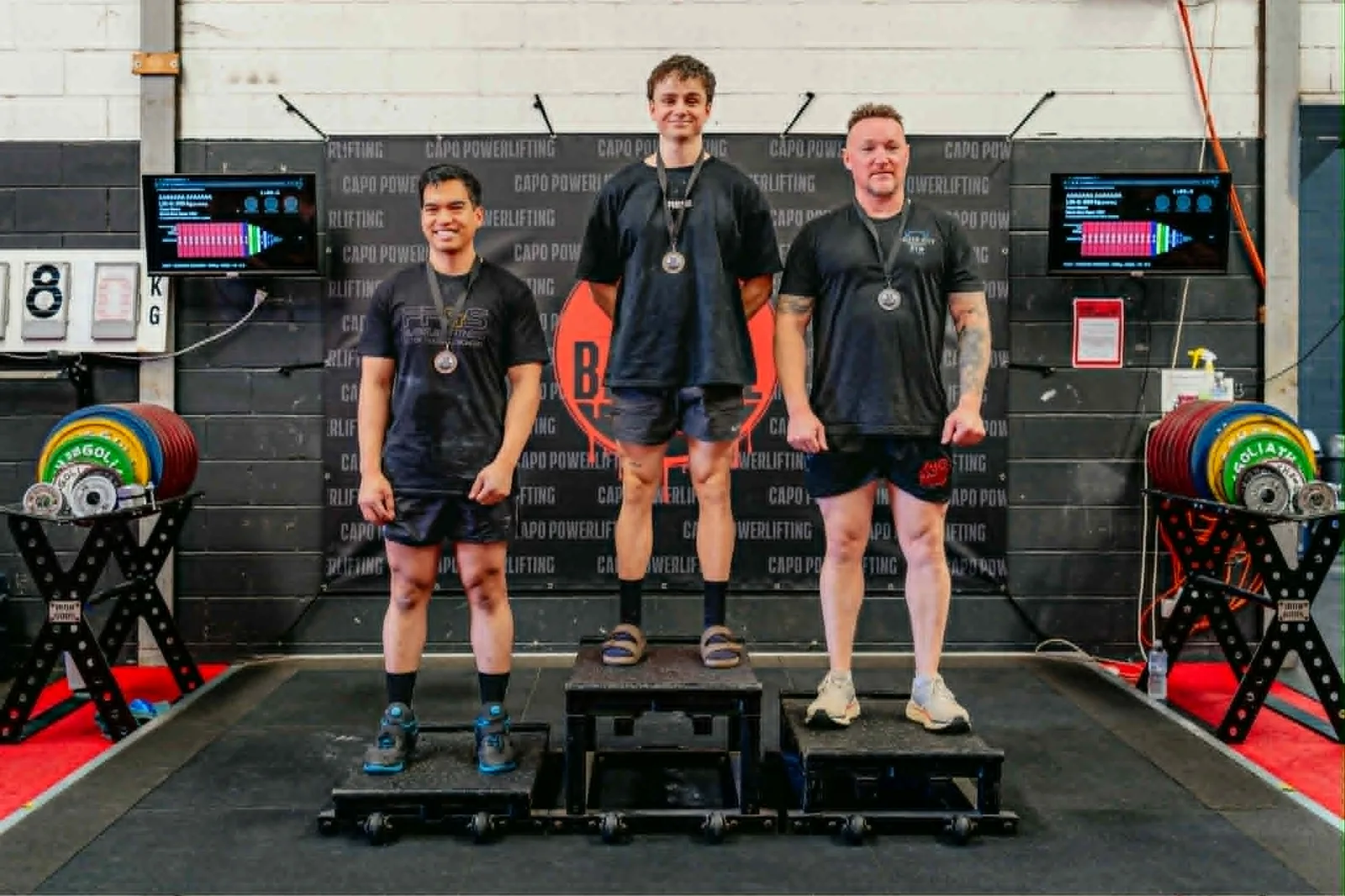
- Powerlifters and strength athletes protecting a heavy training block
- Tradies on the tools — plumbers, sparkies, welders, brickies — whose forearms, shoulders and lower backs work overtime
- Farmers and outdoor workers whose seasonal loads are heavier than most gym programs
- Parents chasing toddlers, lifting car seats, hunched over prams
- Shift workers on their feet for 10 or 12 hours with irregular recovery windows
If your daily life is physical, your body is under a training load whether or not you'd call it that. See massage for shift workers in Port Pirie for a closer look at how sessions get shaped around irregular hours.
Cadence and focus by activity type
| Activity | Common load pattern | Suggested cadence |
|---|---|---|
| Distance running | Calves, hips, glutes, hamstrings, plantar fascia | Fortnightly in build, monthly in base |
| Powerlifting / strength | Upper back, lats, hips, adductors, forearms | Fortnightly through heavy blocks |
| Footy / netball / hockey | Hamstrings, adductors, glutes, ankles | Fortnightly in season, monthly off-season |
| Gym / CrossFit | Shoulders, lats, hips, forearms | Fortnightly with high volume, monthly at maintenance |
| Tradie on the tools | Forearms, shoulders, lower back, neck | Fortnightly year-round |
| Cycling / triathlon | Neck, upper back, hips, quads, ITB | Fortnightly in build, monthly in off-season |
| Recreational hiking / walking | Calves, hip flexors, lower back | Every 4-6 weeks; fortnightly before a big walk |
What sports massage isn't for
Sports massage is a great tool for training recovery, chronic tightness, and catching niggles early. It isn't a replacement for medical care after a serious injury (see a GP or physio first), a rehab program for a diagnosed structural issue (that's your physio's job), or a substitute for the boring but essential fundamentals: sleep, hydration, sensible programming, and mobility work you actually do. It supports those things; it doesn't replace them.
If you have an acute injury — a fresh muscle tear, a suspected fracture, a joint that suddenly won't move properly — the answer is a GP first, not the massage table. Once you've been assessed and cleared, remedial and sports work can be a valuable part of the recovery plan. Sarah works with people in exactly this situation regularly.
How often should active people book?
Most active clients settle somewhere between fortnightly and monthly. Through a heavy training block or peak season, fortnightly usually wins — enough contact to stay ahead of accumulating tightness, not so much that the sessions themselves become a load. Through a base or off-season phase, monthly keeps the maintenance rhythm without over-committing. See how often should you book a massage for a wider look at cadence.
One pattern worth naming: many active clients book sessions reactively — only when something is already sore — and wonder why they keep getting injured. The steadier rhythm of a session every two or three weeks, whether or not you feel like you need it, catches patterns before they get expensive. Small niggles resolved on the table beat a month off training every time.
Where does cupping fit in?
Cupping is a great add-on for sports and active bodies. The gentle suction lifts and decompresses tissue rather than pressing into it, so it reaches muscles from the opposite direction to hands or stones. That different angle is often exactly what stubborn spots — a locked upper trap, a lingering back-pain pattern, a chronically tight hamstring — need to finally let go. Cupping can be added to any remedial session for $15 or booked as a stand-alone 45-minute session for $50. See cupping vs deep tissue massage for how the two modalities compare.
How to time sessions around events
The general rule: book firm, targeted work in the middle of a training block, and lighter, flushing work close to an event. For a runner three weeks out from a race, a deeper remedial that catches every tight spot is a good idea. For the same runner three days out from race day, a lighter, more flowing session that clears residual tightness without adding new soreness is safer. As a rough guide:
- 3+ weeks out: deeper, targeted work is fine — plenty of time to recover
- 1-2 weeks out: moderate pressure, whole-body focus, clear the busy spots
- 3-5 days out: lighter session, flushing style, no aggressive new work
- 24-48 hours out: skip, or a very gentle 30-minute reset only if you know how you respond
- Post-event, 24-72 hours after: gentle flushing session to help the recovery process
- Post-event, 4-7 days after: firmer work to unwind any lingering compensation patterns
What to tell Sarah before a sports session
The more you can tell Sarah about your training load and any events on the horizon, the better she can shape the session. Useful details include: what sport or activity, how many sessions per week, where you're at in your training cycle (build, peak, recovery, off-season), any events coming up and how far away, current niggles or old injuries, and how you've historically responded to firmer work. First-time clients don't need to have all the answers — Sarah will lead the intake — but returning clients often report that saying big meet in nine days at the start of the session makes the whole hour more useful.
Common mistakes active people make with sports massage
A few patterns Sarah sees regularly, especially in newer clients. First, booking a hard session the day before a big event — the tissue hasn't had time to settle, and you often perform slightly heavy-legged. Book firmer work at least four or five days out. Second, only booking when something already hurts — reactive care is more expensive over a year than a steady rhythm, both financially and in time off training. Third, treating pain as feedback to power through rather than to investigate; a niggle that shows up the same way twice is a message, not a nuisance.
Fourth, chasing pressure instead of chasing usefulness. Firmer isn't better if the wrong muscle is being hammered. A moderate session that addresses the actual driver of your tightness will do more than a hard session that punishes the wrong spot. If in doubt, talk it through with Sarah at the intake — she'll shape the session around what your training actually looks like rather than what a stock template suggests.
Booking and pricing
Sports and remedial massage share the same pricing: 30 minutes $50, 45 minutes $65, 60 minutes $85, 90 minutes $120. Cupping is $15 as an add-on or $50 stand-alone (45 minutes). Sixty minutes is the most common booking for active clients; 90 minutes covers a full body plus targeted work if you're carrying multiple loaded areas. See the pricing page for the full breakdown, and private health rebates for massage for what your fund may cover. Book online or ring 0439 594 999.
If you'd like to talk through what's going on with your body and book a session, get in touch with Sarah on 0439 594 999 or book online. Private health insurance rebates may be available depending on your provider and level of cover.
Conditions this post touches on.
For a deeper look at specific patterns Sarah works with, see the condition-focused pages below.
RSI & Forearm Pain
Targeted remedial massage in Port Pirie for repetitive strain injury, forearm tightness and the wrist and hand patterns that come with it.
Learn more →
Frozen Shoulder (Adhesive Capsulitis)
Careful, supportive massage in Port Pirie for adhesive capsulitis — designed to work alongside your medical and physio care through each stage of recovery.
Learn more →
Plantar Fasciitis & Foot Pain
Massage in Port Pirie for plantar fasciitis and persistent heel pain — calf and foot focused work designed to help relieve the pattern behind the symptoms.
Learn more →